January 2015 – Imaging and the first major element data!

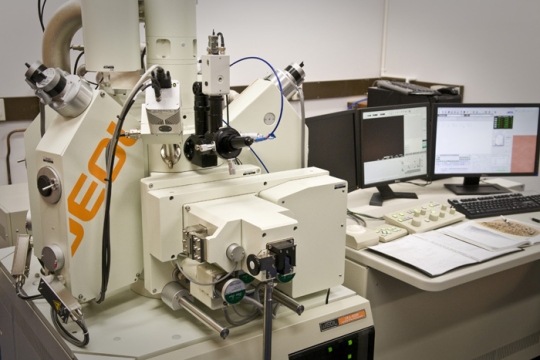
Following a lot of sample prep including crushing, sieving, crystal picking, polishing, the first set of crystals and glass from the pyroclastic units were ready to be imaged using a Scanning Electron Microscope (SEM) at the University of East Anglia. Following imaging, analyses of major element (elements which have a concentration greater than ~ 0.5 wt.%) variations within single crystals (and glass) was quantified using an Electron Probe MicroAnalyser (EPMA) whilst Katy was visiting the Victoria University of Wellington in New Zealand.
2015_1.jpg

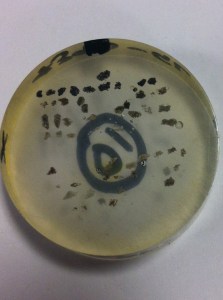
Epoxy block with glass fragments ready to be imaged and analysed.
2015_2

Electron microprobe university of Wellington

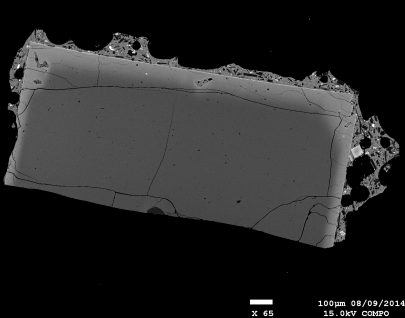
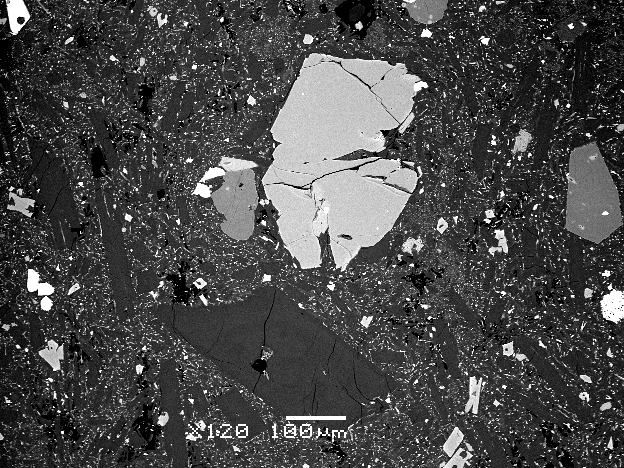
The brightness of back-scattered electron (BSE) images is proportional to the total atomic number of elements in the substance being analysed, therefore we can use these BSE images as proxies for chemical changes within the single crystals, which can record changes in magmatic conditions whilst the crystals were residing in the magma chamber. We then used the images to help us locate our analysis points on the EPMA to make sure we got analyses of all chemically different zones within crystals. We obtained BSE images of the crystals and glass from both mafic and silicic fall units, and one pyroclastic flow unit, and the crystals show surprisingly little chemical changes from the interior of the crystals to the rims of the crystals- showing the lack of changes in the magmatic system as the magma evolved. However, there are significant differences in chemical compositions between different units sampled, which we will use to help track the evolution of the magmatic system underlying Ascension through time.
2015_3 zoned ol

Zoned olivine crystal from scoria fall unit
2015_4 lavaLetter

BSE image of young lava flow from Letterbox showing different crystal types by their different greyscale intensities.

November 2014 – Mineral and groundmass separation

Sample preparation for 40Ar/39Ar dating continues in earnest! After Katy and Katie’s marathon rock crushing session in October, sample splits were taken back to UEA for the next stages of preparation for dating. We want to analyse sanidine crystals from the pumice samples, and fragments of groundmass from the lavas and these have to be separated. After crushing, the next step was to sieve the crushed samples into different size fractions to make the grains easier to separate. The sieved fractions were then washed in water in a sonic bath to clean them and dried overnight in an oven. For the next steps of the process, Katie made another trip to East Kilbride to work with the SUERC-based members of the team (Darren, Ben, Jim and Ross). Here, the samples were then run through a magnetic separator, which separates different materials based on their how magnetic they are. After several runs through the magnetic separator, set at different conditions, crystal and groundmass concentrates were separated!

image31

The magnetic separator at SUERC

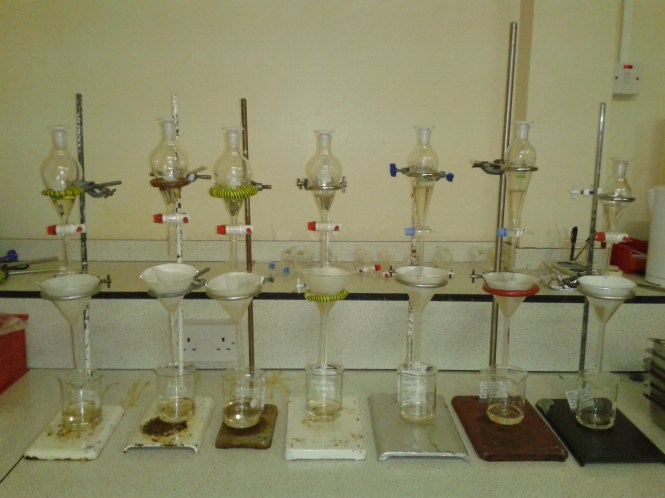
However, this is not the end of the process! In order to get the best data, the samples need to be refined even further. Crystals from the pumice were leached in hydrofluoric acid, which attacks and removes any groundmass glass stuck onto the crystals, and the groundmass was leached in hydrochloric acid and then nitric acid. The crystal separates from the pumice were then refined even further by carrying out density separation. The crystals were dropped into a heavy liquid, lithium metatungstate (LMT), which is denser than the sanidine, allowing the sanidine crystals to float and the other crystals to sink to the bottom.

image32

Density separation underway at SUERC

After all this preparation, the samples are now ready to be hand-picked under the microscope, in order to choose the very best crystals and groundmass for analysis.

October 2014 – Lab work, lab work and more lab work!

Having had a successful group meeting planning which samples our initial priority for Ar-Ar dating, cosmogenic dating and geochemical investigation are, lab work to prepare the samples began in earnest. For both the Ar-Ar and cosmogenic dating, large volume samples were collected, to give the best hope of picking enough crystals to get dates from, which meant that a trip to SUERC at East Kilbride was necessary to crush all the lavas and pumice samples to less than 2mm in size. Whilst preparing the samples for crushing (removing weathered edges for Ar-Ar and geochemical investigation) we also checked to ensure that the rocks were crystalline enough to allow for dating! (see picture). In 2 weeks we managed to crush more than 50 samples, which have headed back to Durham and Norwich for further preparation, involving sieving, various crystal concentration techniques and finally crystal picking by hand. Once the crystals have been picked they can be mounted into epoxy for major and trace element analysis, or they can be prepared for Ar-Ar (feldspar or groundmass) and cosmogenic (olivine or pyroxene) dating.

image35

A selection of different rock samples before being processed

image34

Examining rock samples using a hand lens

image36

Volcanic rock sample before crushing

9 – 13th September 2014 – Cities on Volcanoes 8 Conference (Yogyakarta, Indonesia)

In September, Anna, Rich and Katie attended Cities on Volcanoes 8 Conference. The conference was held in Yogyakarta, on the foothills of Merapi volcano, Indonesia, one of the most active and dangerous volcanoes in the world. This major international volcanology conference is held every 2 years, each time in a different volcanic area of the world, bringing together hundreds of volcanologists, city authorities, emergency managers and economists, to evaluate volcanic crises, preparedness and management in populated areas.

Katie presented a poster outlining the Ascension Island project and summarising preliminary field results. Many people were fascinated by the excellent examples of a huge range of volcanic deposits found on Ascension and are excited about what our investigation will reveal about the volcanic history of Ascension.

Other highlights of the conference included a fascinating fieldtrip to the beautiful but deadly Merapi volcano and an evening showing of the traditional Ramayana ballet at the ancient and spectacular Hindu Prambanan temple, a UNESCO world Heritage Site.

cities on volcanoes image

Cities on Volcanoes 8 Flyer

June – July 2014- Ascension Fieldwork

Following lots of organisational meetings and planning, ten of us (Katie, Rich, Barry, Jon, Jenni, Anna, Charlotte, Ben, Fin, Katy) headed over to Ascension Island in June to carry out fieldwork for ~3 weeks. Although not everyone could be out for the entire time, we managed to collectively cover a lot of ground on the island!

Our main aims on the field trip were:

  • To characterise the range in eruptive deposits present on the island, and begin to establish an eruptive stratigraphy (or timeline) for various parts of the island.
  • To sample the wide range in compositional types of lava flows already identified by previous workers and use these to investigate the eruption ages, and the nature of the magmatic plumbing system.
  • To sample the two youngest lava flows on the island to date both using Ar-Ar and cosmogenic techniques- as well as sampling the pyroclastic units for Ar-Ar eruption age dating.
  • To understand the range of volcanic hazards present on the island.
  • To hold meetings and interviews with island stakeholders to discuss the project, to identify local infrastructure available in the event of a natural hazard on the island and to understand what information would be useful to locals from the project.

Although we were all expecting a wide range in lava and pyroclastic deposits on the island, we were still all surprised by quite how much variation there was in the style and volume of various deposits on the island!

image26.png

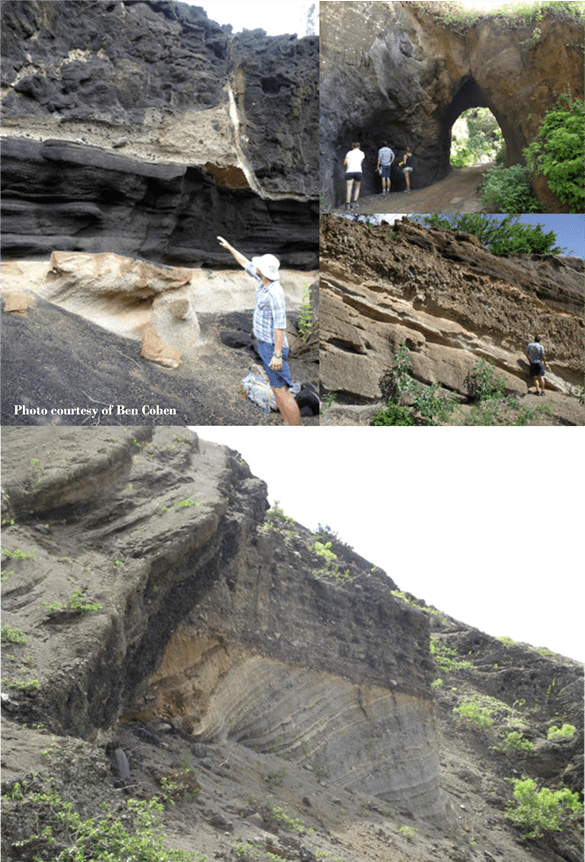
A range in eruptive deposits found on Ascension Island, from the Green Moutain scoria (left), to the layered fall/breccia deposits on NASA road (middle), to stratified fall deposits and multiple unconformities in Goat Hole Ravine(right). Photos courtesy of Ben Cohen, Charlotte Vye-Brown and Katie Preece

Having identified such a wide range in volcanic deposits, we then set about sampling both lavas and pyroclastic units to take back to the UK with us for dating and geochemical analyses. This sometimes meant a long time searching for the freshest looking section of lava to make sure all our analyses work- but it was time well spent!

By the time we finished our 10-day sampling campaign we had managed to collect 7 full crates of rocks, which were sent by ship back to the UK- which will then be used for analyses of the timing and style of volcanism throughout the island’s subaerial history.image29
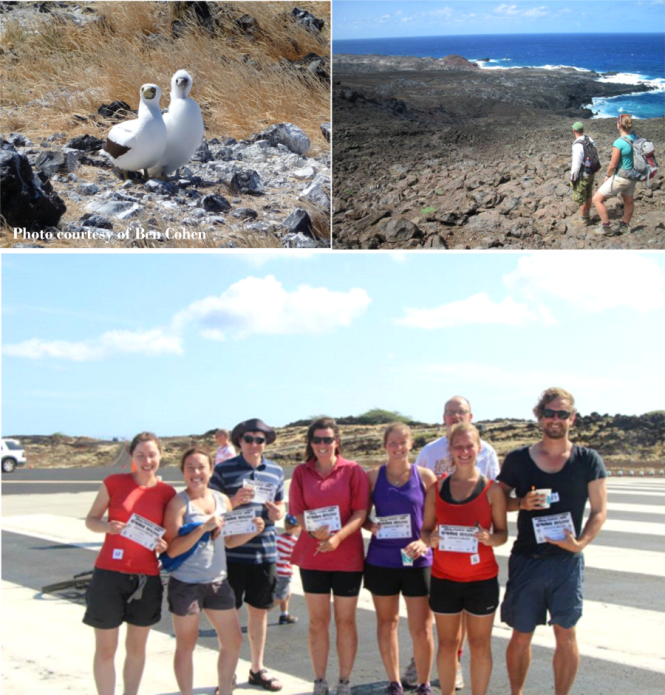
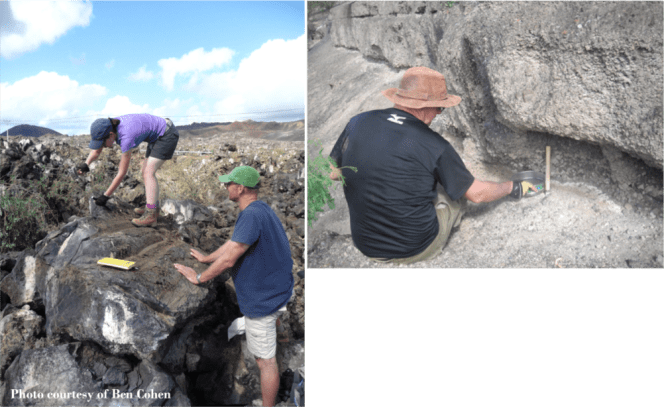
Clockwise from top left: An adult and chick masked booby; Pausing on the way to Crystal Cove to take in the view; Group picture after the 4th July Runway Fun Runimage27Katie and Finn sampling lava on English Bay Road; Fin sieving a pyroclastic fall unit on the pyroclastic plain near Two Boats
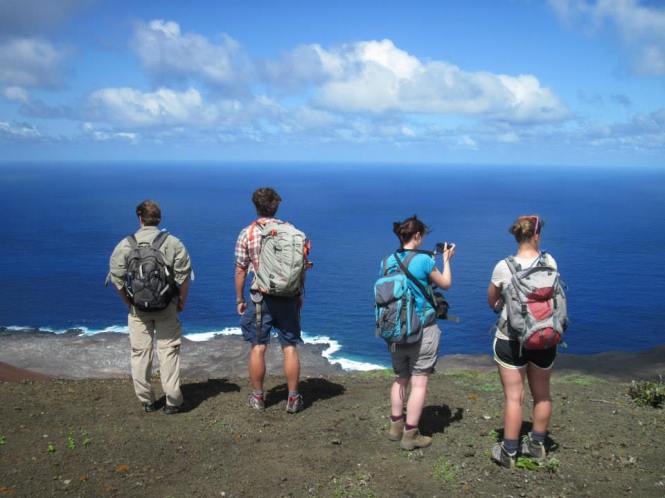
image28

The rocks ready to be picked up and sent on the ship to the UK

While our time on Ascension passed all too quickly, we still managed to collect a lot of samples, and get a good handle on the eruptive deposits on the island- now we can’t wait to come back for a second field season to conduct much more detailed stratigraphic logging, to iron out the fine details in Ascension eruptive history!

image30